
August 15, 2026: Happy Birthday to Julia Child.
Every year about this time, I start watching the market tables for a particular tomato. It is big and round and old-fashioned red, and it carries her name: the Julia Child heirloom. It ripens right along the same time as her mid-August birthday, as if it planned things that way.

Here is the part I love. Julia, who passed away in August of 2004 and was our nation’s grande dame of cuisine and my personal culinary hero. She refused, for her whole life, to lend her name to a pot or a pan or a gadget of any kind. But in 2000 and 2001 she made one exception. She let her good friend Gary Ibsen, a grower of more than 400 varieties of heirloom tomatoes and the founder of the annual Carmel TomatoFest out in California, name a tomato in her honor. Her only request was, “That it be tasty.”
Of course it was and still is. For the gardeners among you, those seeds live on: you can still order a packet of Julia Child heirloom tomato seeds from TomatoFest, the seed company Ibsen founded, in plenty of time to grow your own for next year’s harvest.
But here is the part of this story that makes it mine. Julia told me about that tomato herself, on the phone, all those years ago. So now, every summer, when I spot the Julia Child variety at a local market, it is never just a tomato to me. It is my once-a-year, you-heard-it-here-first reminder of the woman herself, and of everything she brought to the table.
Which is really what this post is about. Not the tomato. It’s about Julia.
Thank You, Julia!
If it wasn’t for the front-running efforts of Julia Child, pitching and starring in one of the very first televised cooking shows that really and truly made it easier for home cooks to raise the bar; simply breaking down a complicated classic recipe so the rest of us could see how it was done, I wouldn’t be doing what I do today.

She took her passion and ran with it, with wild abandon, to lead the charge to change the culinary world. She brought the style and technique of French cuisine to American home cooks. And we are all forever grateful that she didn’t let anyone or anything deter her efforts. First there was the two-volume tome, Mastering the Art of French Cooking, Vols. 1 and 2, which she co-authored. And then, through a whole run of her own television series, there were dozens of books that followed. All of them worth added to your cookbook collection. It all started with The French Chef, produced by Boston PBS station WGBH in 1963. Every class I teach and every recipe I write, traces back, one way or another, to her.
My Julia Child Story
I have told this story many times before, so bear with me if you have heard it. Julia was such an icon that I think, at least once a year, it bears repeating. Ask any food writer, chef or culinary professional and they will probably have a Julia Child story of their own.
Mine started in the mid 1960s, when I was eight or nine. I loved to watch what was then the first television show of its kind, Julia’s new PBS series, The French Chef. At first I wasn’t so interested in the cooking as I was fascinated by Julia herself. There was something about her attitude and her panache. To say nothing of all those little bowls into which each and every ingredient was placed, the mis en place, ready for Julia to whip into something wonderful. And oh, how I loved her flourish as she raised her glass to toast us all at the end of each show. “Bon Appetit!”

How It All Began
The home I grew up in, in Jacksonville, Florida, had a large bathroom that my brother Jaimie and I shared, fitted with a long vanity and a wall mirror set low enough that I could see myself without standing on a stool. Inspired by Julia, I would while away whole afternoons carrying a few pots and pans and every little bowl I could find into that bathroom, cover the sink with Mom’s well-worn wooden cutting board, and pretend to cook with all the Julia-like flourish I could muster, watching myself in the mirror just as I had watched my mentor on television.
A few years later my parents gave me my very own copy of The French Chef Cookbook and encouraged me to move from the bathroom to the actual kitchen, where I began to cook for real.
“Hiiiiideeeee, Julia here…”
Fast forward to September of 2001. I was living in Charlotte North Carolina, teaching cooking classes, catering, and working as a food writer and restaurant critic. The 40th anniversary edition of Mastering the Art of French Cooking had just been released, and in promotion for it, Julia Child was available for interviews. I set up the interview, dialed the number the PR people gave me. Who would have thunk it? Those were differnet times and the number was Julia’s home office. I got her answering machine. In her own unmistakable warble she explained that no one was home right now, please leave a message. I left my name. Later that day I came home to find a message waiting on my machine.
“Hiiiiideeeee, Julia here…”
My heart raced. I think I may have actually stopped breathing for a moment. She was headed out to dinner with friends, but I could call her back in the morning. I don’t think I slept a wink that night. I saved that message on the mini cassette in my machine, back in the days before the world went digital, and played it over and over for months until the tape finally wore through and broke.
A Phone Conversation to Remember
I never met Julia in person, but I had the great good fortune to interview her by phone on two occasions. In that first conversation I stammered and stumbled over my questions, unable to think of much beyond the fact that I was actually talking to Julia Child. She was her delightful, unpretentious self and put me at ease right away. After a while it was like chatting with an old friend.
Somewhere in there, we got to talking about knives, of all things. Julia confessed that she was, in her own words, “sort of a knife freak,” which, if you have ever seen her kitchen with its knives lined up along the magnetic strips, is a considerable understatement. And then, ever the curious cook, she turned it right around and asked me what kind of knives I liked to use. Julia Child, asking me about my knives. I could have floated to the ceiling.
She even asked me for a recipe. “I hear your fried chicken is really quite good down there,” she said. “Would you send me the recipe, if you have a good one?” I was on cloud nine. I mailed a recipe off the very next day. I never heard back but that was ok. To this day I still have her number and address written in my old paper address book.
Julia and Paul and Their Life in France
A native Californian, Julia graduated from Smith College in Massachusetts in the 1930s. In those days a woman was expected to graduate into being a nurse, a secretary, or a wife and mother, but none of that was for her. “I just wanted to have a good time,” she told me. And she did.
In 1944 she found herself working in Washington, DC, in the Office of War Information, later moving to the Office of Strategic Services, the precursor to the CIA. She was sent on assignment to Ceylon, now Sri Lanka, to gather intelligence during World War II, and it was there that she met the man who would become her husband, Paul Child. Just after the war, the Childs moved to Paris, where Paul served as a diplomat at the American Embassy.
If you have read Julia’s own book My Life in France, then you know the story. But I am forever honored that I heard it first, from Julia herself.
She told me she had studied French all her life, and yet when she arrived in France she couldn’t say a word of it. “At least not a word anyone could understand,” she laughed. “My husband was practically bilingual, taken for French all the time, but somehow I could just never pull it off.” Eventually, looking for something to do, she signed up for a cooking class meant for housewives at Le Cordon Bleu. Her interest piqued, she promptly talked the famous school into admitting her to the training class for former GIs offered under the GI Bill. Six months later she was hooked. “This was for me,” she said. Indeed it was.
Her Kitchen, Preserved
When Julia moved back to California in November of 2001, the kitchen she and Paul had shared in their Cambridge, Massachusetts home, the very kitchen from her last three PBS shows, was carefully taken apart and donated to the Smithsonian’s National Museum of American History. Her hope was that it would inspire the rest of us to “make your kitchen a real family room and an important part of your lives.”
You can still visit that kitchen today. It has been rebuilt exactly as it was and now serves as the opening story of the museum’s food-history exhibition, FOOD: Transforming the American Table. Visitors can see it all: the knives on their magnetic strips, the pots and pans hanging on the pegboard wall. The collection also includes the well-worn copper and every last gadget in its place. It is a wonderful thing to see, and a fitting tribute to a woman who wanted her kitchen, and ours, to be the heart of the home.
Mastering the Art of the Way Julia Cooks
One of the things I love most about the way Julia and her editor Judith Jones built Mastering the Art of French Cooking is that everything begins with a master recipe. From there she walks you through the technique, the equipment, the ingredients. Then, each master recipe is followed by several more that use the same technique and ingredients, right down to smart ways to use up the leftovers.
It is a very smart way to learn to cook, and plenty of cookbook writers have borrowed the format ever since. It is also, if I am honest, exactly how I teach. Give me the bones of a dish and the reason behind each step, and I will never be stuck for dinner again.
Julia’s roast chicken is the master recipe is one I come back a lot. I have shared my own local twist on it before, and you can find that recipe right here.
When you do roast that bird, do yourself a favor and pour a crisp North Carolina white alongside it. I love a 2023 Vermentino Appassimento from Piccione Vineyards, one of the family-owned wineries I got to know on my swing through Wilkes County Wine Country. You can order their wines here.
Julia’s Boeuf Bourguignon
If I were pressed to name a single dish that says “Julia Child”, this may be the one. When The French Chef debuted on February 11, 1963, the very first episode opened with Julia leaning over a big steaming pot of boeuf bourguignon, calling it, in that unmistakable voice, “a perfectly delicious dish.” It is the dish that introduced a whole country to French home cooking.
If you have seen the movie Julia & Julie, you probably remember the scene where the beef gets dried, one painstaking cube at a time, patted down with a towel before a single piece hits the pan. There is a very good reason for all that fuss. It’s a process I always mention in a cooking class or demo.
Wet Meat Won’t Brown
As Julia herself wrote, the beef “will not brown if it is damp.” The happy news is that these days you can lose the dish towel and simply blot everything dry with a few paper towels.
A dry surface is what gives you that deep, delicious brown, and a good brown is what gives you a great stew.

It is also a master recipe in the truest sense. Learn the bones of it, brown your beef properly, braise it low and slow until a fork slides right through, then finish it with a tangle of glazed pearl onions and sautéed mushrooms, and you have the technique for a hundred braises to come. It takes an afternoon, but almost none of that is hands-on time, and it is even better made a day ahead. Cook it once and I promise it will earn a permanent place in your repertoire, right where Julia would want it.
Here is my adaptation, made the way I like to make it, with a few of my own favorite locally sourced products and proteins folded in.
Where to Shop and Source Locally
A word on two of those touches, the beef and the wine, because they make all the difference.
For the beef, I go local and I go to a friend. Shelley Eagan raises gorgeous, 100% grass-fed, sustainably raised beef at Proffitt Cattle Company in Kings Mountain, NC. Proffit’s stew beef is my not-so-secret weapon in this dish. It is not any one single cut. It is a blend of the trim from all across the animal, which means every spoonful pulls the very best flavor from every part, exactly what you want in a long, slow braise like this one.
For the Sea Salt in the recipe, I suggest shopping locally with Sea Love Sea Salt from Burgaw NC. This is hand-harvested, solar evaporated salt and it’s delicious! You can order from them online here.
ISO A North Carolina Extra Virgin Olive Oil? You won’t find one, olives just don’t grown in The Old North State. But we do have the next best thing. Olive Crate Kores Estate Extra Virgin Ultra Premium Olive Oil is my go-to. The olives are grown in Greece on a family farm. And the Family of the family on the farm in Greece, live in Charlotte, NC. So I like to say this Extra Virgin Olive Oil has a North Carolina footprint. Order online to Shop Locally here.
And What About A NC Wine Pairing ?
And when it comes to the wine, both for the pot and for the glass in your hand while you cook, I love pouring a North Carolina red. My pick these days is a red blend from Dynamis Estate Wines, one of the hidden gems I stumbled onto on a trip through Wilkes County Wine Country. Read more about my day at Dynamis Here, at the bottom of the post.
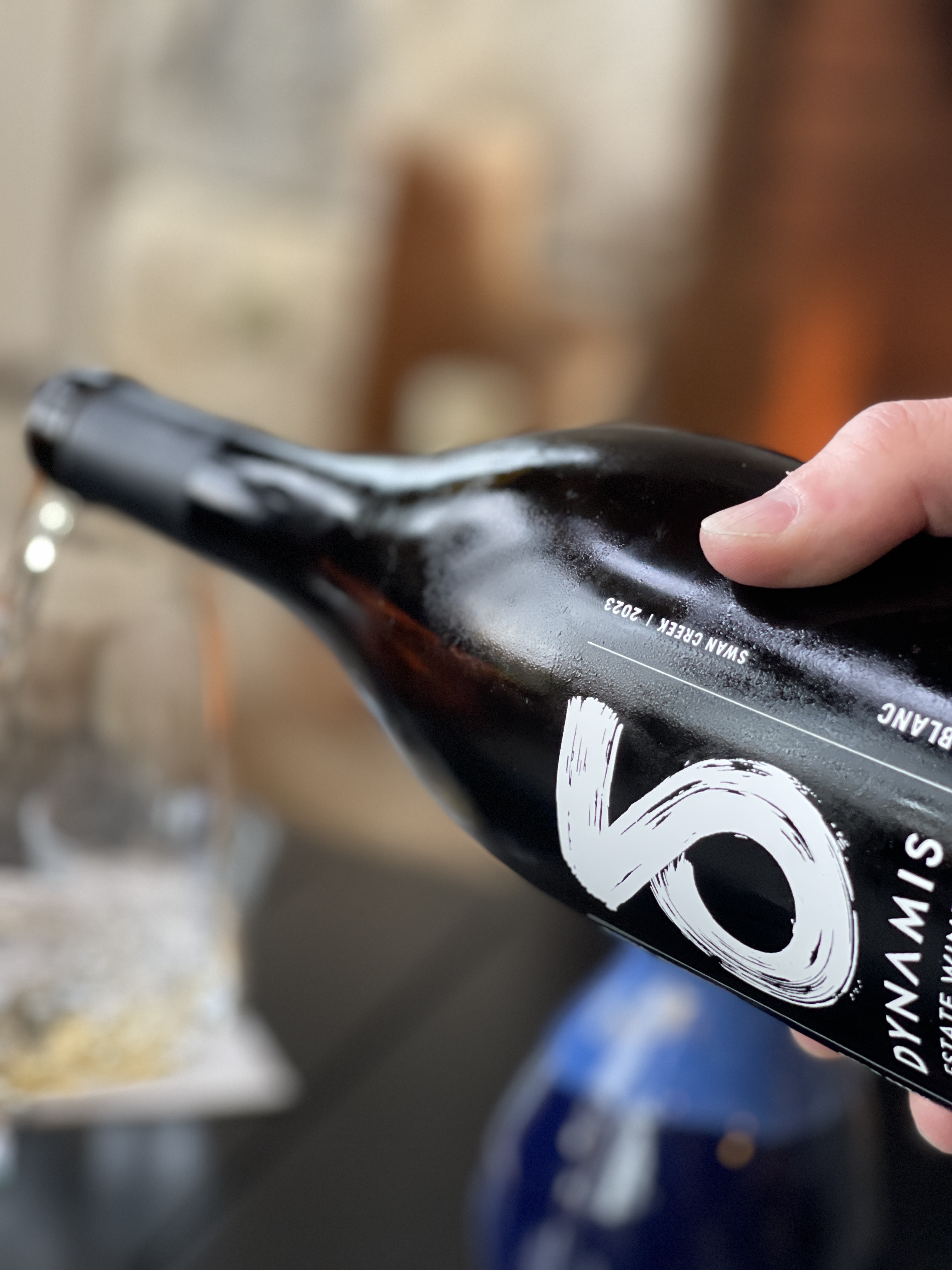

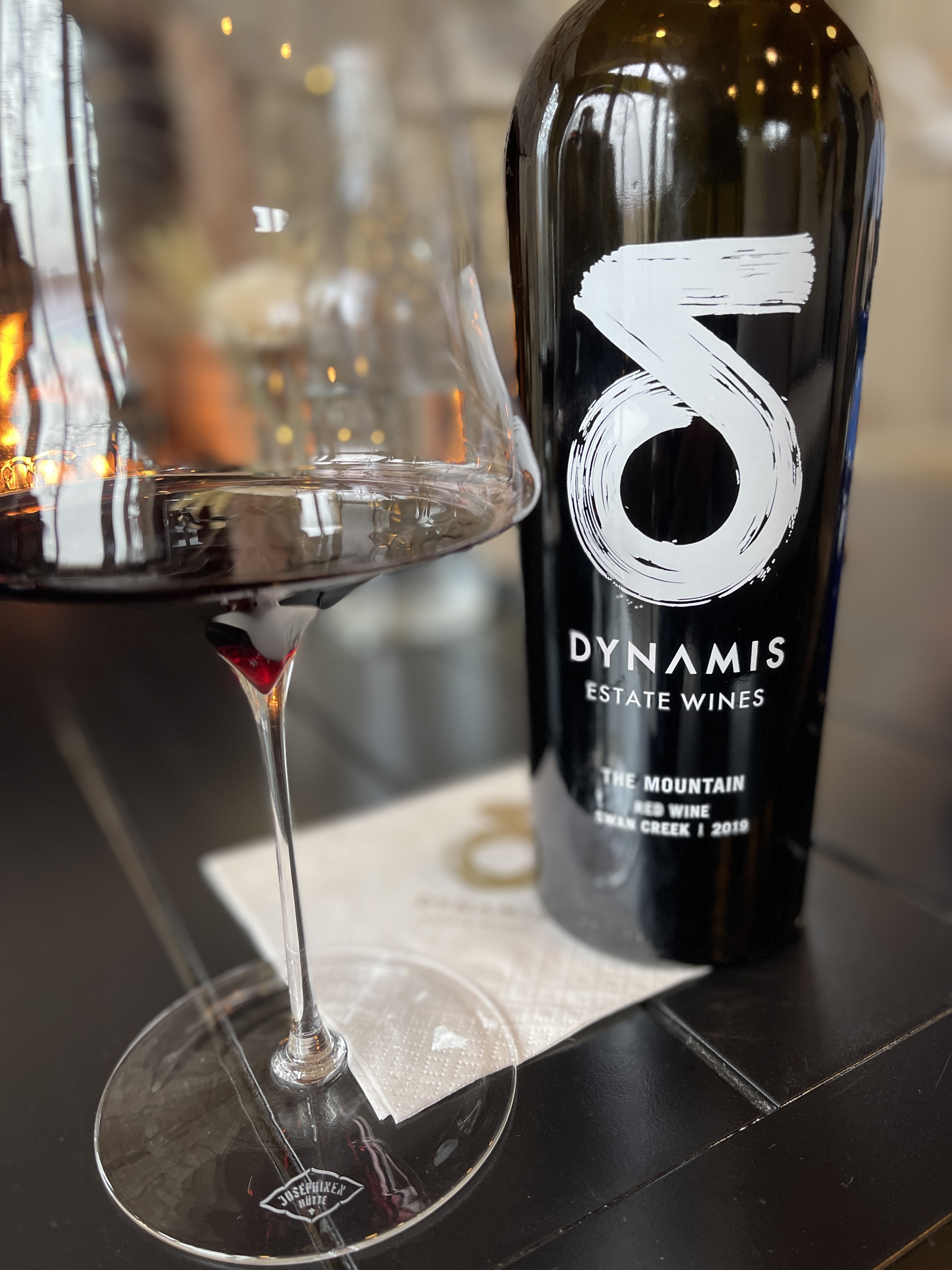
The wine is called The Mountain and you can learn more about it and place an order here
Here is why I love this particular pour: like the beef, it is a blend. Not just one single grape, but a little bit of all the best parts of this winery’s vines, which is exactly what makes it a NC winery worth knowing about. It is a beautiful, big red that stands right up to the beef. So treat yourself this fall, make an appointment for a private tasting, and you can thank me later.
Perfect for any birthday celebration you have in the works….
Julia’s Boeuf Bourguignon Recipe
Recipe adapted by Food and Travel Writer, Heidi Billotto
Ingredients
For the Beef:
- 3 Tbsp Olive Crate Kores Estate Olive Oil
- 2 Sprigs Fresh Rosemary
- 3 Lbs stewing beef, cut into 2-inch cubes cut into 2-inch cubes
- 1 whole carrot peeled and sliced
- 1 whole Onion peeled and sliced
- Sea Love Sea Salt and Heidi's Hot Pepper Blend to taste
- 2 Tbsp. All Purpose Flour
- 3 Cups Your Favorite Red Wine don't skimp here. This should be a wine you love to drink for the very best flavor in the dish
- 2-3 Cups Beef Stock
- 2 Tbsp. Tomato Paste or Tomato Powder
- 1 sprig Fresh Thyme leaves and stems
- 2 bay leaves, fresh or dried
For the Braised Onions
- 18-24 White Pearl Onions peeled
- 1 1/2 Tbsp. Butter
- 1 1/2 Tbsp. Extra Virgin Olive Oil
- 1/2 cup Beef Stock
- Sea Love Sea Salt and Heidi's Hot Pepper Blend to taste
- 1 bay leaf fresh or dried
- 1 sprig Fresh thyme leaves with stem
- 1 sprig fresh parsley, stem and leaves
For the Sauteed Mushrooms
- 1 lb. Mushrooms quartered
- 2 Tbsp, Butter
- 1 Tbsp. Extra Virgin Olive Oil
Instructions
For the Beef:
-
Put the olive oil in a large Dutch oven with the rosemary and warm over medium heat. Pat the pieces of beef thoroughly dry with paper towels, since they will not brown if they are damp, then sauté them, a few at a time, in the hot oil until nicely browned on all sides. Once browned, remove to a side plate.
-
In the same oil, sauté the onion and the carrot until softened. Add the beef back to the casserole, season with salt and pepper, and sprinkle with the flour
-
Set the uncovered casserole in a 450 degree oven for four minutes. Toss the contents of the casserole again and return to the hot oven for 4 more minutes.
-
Now, lower the heat to 325°F and remove the casserole from the oven. Add the wine and enough stock so that the meat is barely covered. Add the tomato powder and herbs. Bring to a simmer on top of the stove, then cover and place in the oven,adjusting the heat so that the liquid simmers very slowly for several hours.The meat is done when a fork pierces it easily.
-
While the meat is cooking, prepare the onions and mushrooms and set them aside until needed.
To make the braised onions:
-
Heat the butter and oil in a large skillet and add the onions. Sauté over medium heat for about ten minutes, rolling the onions about so they brown as evenly as possible without breaking apart. Pour in the stock, season to taste, add the herbs, and cover. Simmer over low heat for about 40 to 50 minutes, until the onions are perfectly tender but still hold their shape and the liquid has mostly evaporated. Remove the herbs and set the onions aside.
To make the sautéed mushrooms:
-
Heat the butter and oil over high heat in a large skillet. As soon as the foam begins to subside, add the mushrooms and toss and shake the pan for about five minutes. As soon as they have browned lightly, remove from the heat.
To finish the stew:
-
When the meat is tender, distribute the mushrooms and onions over the meat. If thesauce is too thick, add a few tablespoons of stock. If it is too thin, boil itdown to reduce it to the right consistency. Taste for seasoning.
Heidi’s Hot Pepper Blend
You will see this called for in the recipe above, and if you have cooked with me before you know it turns up in just about everything I make. It is a blend I came up with years ago, and it packs a wonderful, aromatic punch that a plain pepper mill just cannot touch.
- Lampong peppercorns
- Tellicherry peppercorns
- White peppercorns
- Pink peppercorns
- Whole coriander seeds
Use equal amounts of each. I get my peppercorns and corinder seeds from Spicewalla, the terrific Asheville, NC spice company. Why coriander? It gives the blend a bit of a citrusy edge. Combine everything and grind to your liking, fine or coarse, in a coffee or spice grinder. It is the essential oils released from the freshly ground peppercorns that make all the difference, so grind in small batches as you need them.
One important note: skip the handheld pepper mill for this one. The pink peppercorns are too soft and will gum it up, so a coffee or spice grinder is the way to go. When you are done, grind a tablespoon or two of coffee beans and toss them out. They act as a filter and clear the pepper taste from the grinder, so it is ready for your coffee come morning.
Bon Appetit, Dear Julia
Julia lived a full and happy 91 years, and in a culinary career of some 42 of them she gave us more than most of us will ever fully realize: the cookbooks, still in print; the shows, still running; the professional organizations and the scholarships that opened culinary school to cooks who might never have gotten there otherwise. And somewhere in all that reach was one little girl in Jacksonville, Florida pretending to cook in front of a bathroom mirror, who grew up to get to do it for real.
So as you shop the local tomato harvest in late summer and early fall, look for the Julia Child tomato at your market while the season is with us. And if you can’t find the Julia Child tomatoes, go to a bookstore and pull one of her cookbooks off the shelf. Take your sweet time and enjoy the read. Even if you never make one recipe, you’ll be a better cook for taking the time to learn.
We raise our glasses to you, Julia. Happy Birthday, and Bon Appetit!
More About Food & Travel Writer Heidi Billotto
Heidi Billotto is a culinary storyteller, educator, and on-air expert who brings local food to life wherever she goes.

She connects small family farmers, independent producers, and regional makers to the people, plates, and media outlets that showcase their work, then shows her readers and followers how to bring those ingredients home to their own tables. Known for her deep relationships, genuine curiosity, joyful style, and sincere passion for all she does, Heidi elevates local food culture on the regular through cooking, teaching, travel, and media.
And whenever you see those five little words, #TellThemHeidiSentYou, know that they are my personal seal of approval. It means I have been there, I believe in the folks behind it, and I am sending you their way with my whole heart. So go on…
Plan to try both of these Julia Child recipes ( and the one for my pepper blend) in the next week or so. Before you do, shop local at area farmers markets or online for all of the ingredients from the wine to the EVOO I’ve mentioned here and when you shop be sure to #TellThemHeidiSentYou ! You’ll love the delicious results!